

Kiki Smith - Lilith, 1994 - Bronze, silicon, and glass.
“In medieval Jewish lore, Lilith was Adam’s first wife. When she demanded to be Adam’s equal, she was evicted from the Garden of Eden. Lilith flew away to the demon world, replaced by the more submissive Eve. Smith catches us off guard with Lilith’s pose and placement. Most sculptures receive our gaze passively, but Lilith stares back with piercing brown eyes, ready to pounce.”
hella dope
THANK YOU
my mother told me this story over and over when I was little
"Always be Lilith, never Eve"
"Always be Lilith, never Eve"
Ever since reading about her story when I was younger, I never sought to be Eve again.
Lilith is the one men fear. Because Lilith knows she does not need men to validate her existence.


This is a film studio in Paris. The year is 1905. Can you spot the director?
I’ll give you a hint. She’s wearing a corset.
The woman silhouetted in the center foreground is Alice Guy, the world’s first female filmmaker and head of production at Gaumont. Unfortunately, we can’t hear what she’s saying to the cast and crew, but if you watch this entire clip, you will see her arranging actors and turning on music to help them dance in time.


friendly reminder that famous viner curtis lepore is a rapist.
Wow. What a piece of shit this guy is.

Mister Ghost’s “Dracula” will be on sale in about a week or so, the major pieces are with the art department now. Supplies will be extremely limited.
Postcards, a pocket notebook, a small screen print, more.
Sign up for our mailing list for first dibs.
$20.00 + shipping.

Holy shit, Lifehackable posted something useful.
Except Rohypnol isn’t salty - GHB and other date rape drugs are kinda salty, but Rohypnol isn’t
Rohypnol is BITTER. If your drink is saltier, it’s GHB, if it’s bitter it’s Rohypnol.
Either way, keep safe, friends.
Source: http://lifehackable.tumblr.com

nobody says it but we all know what this is about
This picture is weirdly genius



It’s Been Surreal: The Films of Luis Buñuel
L’AGE D’OR (1930) / VIRIDIANA (1961)
Tonight - 7:30PM Egyptian Theatre
Presented by the American Cinematheque and the Luis Buñuel Film Institute.
Production-related gems from the Buñuel Institute archive will be on display. See what the program to Bunuel’s L’AGE D’OR looked like, read the director’s letter about the making of VIRIDIANA, and view rare production photos of the films - both of which were targeted by censors!
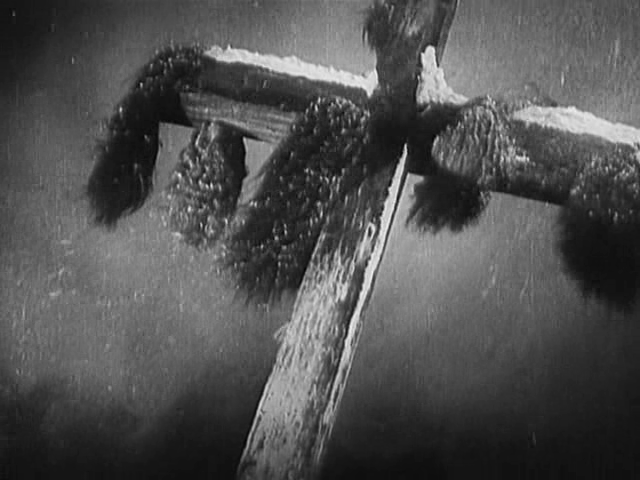
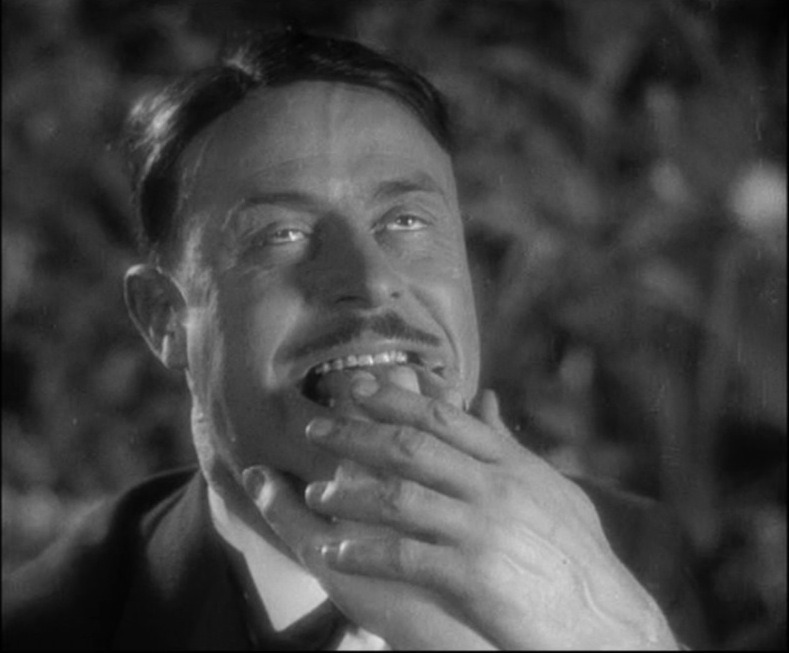
Wonderfully bizarre and spun together with the allusive dictates of dream logic, the second collaboration between Luis Buñuel and Salvador Dalí is a series of gleefully irreverent vignettes, the most sustained of which centers on Gaston Modot and Lya Lys, lovers attempting to consummate their passion but continuously stalled by some of Buñuel’s favorite fixations - the church and the bourgeoisie! Featuring an infamous sequence in which Lys fellates the toe of a religious statue, L’AGE D’OR was banned from distribution for nearly 50 years after its initial release in 1930. With Surrealism co-founder Max Ernst. In French with English subtitles.
VIRIDIANA is One of director Luis Buñuel’s most brilliant, scandalous films was banned in his homeland of Spain and almost got him arrested in Milan. A novice nun (Silvia Pinal) finds herself corrupted by her spectacularly nefarious uncle, Fernando Rey - until she turns the tables on her tio by installing a group of beggars and lepers in his rural mansion. Buñuel gradually, mischievously weaves a web of contradictory impulses: Faith, charity and selflessness become inextricably bound up with lust, hypocrisy and greed in the schizophrenic universe of Old World Latin Catholicism. With longtime Buñuel friend Francisco Rabal. In Spanish with English subtitles.
35mm prints of both films will be screened.
OMG. I love Portland. I love the Hollywood Theatre. but hot damn if the amcinematheque isn’t after mine own heart and after working with them last year for Viscera, I know that they’re some fantastic folks, too.


It’s Been Surreal - The Films of Luis Bunuel
Presented by the American Cinematheque and the Luis Buñuel Film Institute.
Featuring a surrealist ball - Saturday, May 31 - Egyptian Theatre
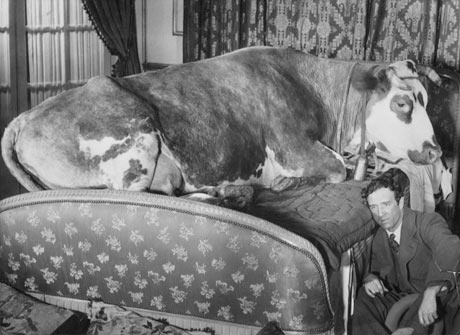
With the 1929 short “Un Chien Andalou,” Luis Buñuel (1900-1983) dove headfirst into Surrealism; the film’s mirthful logic and shocking images (most famously, a sliced eyeball) established the Spanish filmmaker’s unrivaled talent for bringing dreams and nightmares to the screen. After making “Un Chien Andalou” and its feature-length playmate, L’AGE D’OR, he fled the Spanish Civil War and eventually settled in Mexico; the iconoclastic director would frequently return to Europe to make one boundary-blowing film after another.
Fetish, religion, bourgeois society and moral degradation occupy Buñuel cinema like slyly winking serpents. As varying combinations of madonna and whore, VIRIDIANA, TRISTANA and Séverine from BELLE DE JOUR are movie heroines unlike any other, and Buñuel’s gleefully ballsy treatment of taboos remains deliciously entertaining. The razor-sharp class commentary of these works is fused with the cinematic anarchy of “Andalou” in the director’s later features THE DISCREET CHARM OF THE BOURGEOISIE and THE PHANTOM OF LIBERTY, bringing Luis Buñuel’s surreal career full circle.
Series also includes “Land Without Bread” (in a new digital restoration informed by the original scenario notes), a display of production-related gems from the Buñuel Institute archive, a “Surrealist Ball” featuring appetizers from Buñuel’s personally curated home dinner menu, and other surreal surprises.
Series programmed by Gwen Deglise, Grant Moninger and John Hagelston.
Thursday, May 29 - 7:30PM Egyptian Theatre
Production-related gems from the Buñuel Institute archive will be on display. See what the program to Bunuel’s L’AGE D’OR looked like, read the director’s letter about the making of VIRIDIANA, and view rare production photos of the films - both of which were targeted by censors!
L’AGE D’OR (1930)
Wonderfully bizarre and spun together with the allusive dictates of dream logic, the second collaboration between Luis Buñuel and Salvador Dalí is a series of gleefully irreverent vignettes, the most sustained of which centers on Gaston Modot and Lya Lys, lovers attempting to consummate their passion but continuously stalled by some of Buñuel’s favorite fixations - the church and the bourgeoisie! Featuring an infamous sequence in which Lys fellates the toe of a religious statue, L’AGE D’OR was banned from distribution for nearly 50 years after its initial release in 1930. With Surrealism co-founder Max Ernst. In French with English subtitles.
VIRIDIANA (1961)
One of director Luis Buñuel’s most brilliant, scandalous films was banned in his homeland of Spain and almost got him arrested in Milan. A novice nun (Silvia Pinal) finds herself corrupted by her spectacularly nefarious uncle, Fernando Rey - until she turns the tables on her tio by installing a group of beggars and lepers in his rural mansion. Buñuel gradually, mischievously weaves a web of contradictory impulses: Faith, charity and selflessness become inextricably bound up with lust, hypocrisy and greed in the schizophrenic universe of Old World Latin Catholicism. With longtime Buñuel friend Francisco Rabal. In Spanish with English subtitles.
35mm
Saturday, May 31 - 7:30PM Egyptian Theatre
A pageant of iconic Buñuel characters will greet you when you arrive for the Surrealist Ball, which will feature appetizers from Buñuel’s personally curated home dinner menu, his favorite martinis (that just might be served by a nun), rare photos and more Buñuelian interludes. Wear your most surreal ensemble to enter our costume contest!
“Un Chien Andalou” (1929)
Director Luis Buñuel collaborated with artist Salvador Dalí for this groundbreaking short film, a resounding war cry of Surrealism, which bleeds its arresting images (a slit eyeball, an ant-infested hand) into one dreamlike tableau. Different from the version we screened two years ago, this is much closer to what audiences would have seen at the film’s Paris premiere. In French with English subtitles.
“Land Without Bread” (1933) - New Digital Restoration
Originally banned by the Spanish government, Buñuel’s profile of the remote border region of Las Hurdes looks at lives so arduous they border on the absurd. Documentary or mockumentary? See this new director’s cut and judge for yourself. In French with English subtitles.
Discussion following “Land Without Bread” with restoration producers.
BELLE DE JOUR (1967)
Housewife and glacial beauty Séverine (Catherine Deneuve), frigid at home with her doctor husband, indulges in private erotic fantasies that range from sadomasochistic to scatological. To realize her innermost sexual proclivities, Séverine becomes a prostitute at a local brothel, working only on weekday afternoons and taking on the moniker Belle de Jour. Forty-five years after its initial release, Luis Buñuel’s subversive mega-classic is as boundary-pushing as ever, its deft mix of edge and lightness underscored by Deneuve’s nimbly cool performance. In French with English subtitles.
Belle De Jour screens in 35mm
Sunday, June 1 - 7:30PM Egyptian Theatre
THE DISCREET CHARM OF THE BOURGEOISIE (1972)
This later Luis Buñuel masterpiece and 1973 Best Foreign-Language Oscar winner is a return to the subversive director’s Surrealist roots and a showcase for his scrumptiously satirical wit. A sextet of upper-class friends (including Fernando Rey, Stéphane Audran, Delphine Seyrig and Jean-Pierre Cassel) attempt to dine together but are continually stalled by a streaming series of vaudevillian events, both real and dreamed. In French and Spanish with English subtitles.
THE PHANTOM OF LIBERTY (1974)
Surreal even by Buñuel standards, this loosely connected series of Monty Pythonesque sketches thumbs its nose at the conventions of storytelling as well as those of bourgeois society. Buñuel and co-writer Jean-Claude Carrière dream up dirty pictures of French architecture, poker-playing monks, celebrity snipers, fox-hunting tanks and more, setting the table for a banquet of free-wheeling satire. In French with English subtitles.
35mm
“The joke isn’t that they’re cruel or bad at parenting or have any particular disdain for the world at large. They aren’t unkind to their neighbors or to the animals and their deeply devoted to their children and to each other.
The joke is that they’re happy.
The Addams Family is missing a lot of the typical sitcom tropes. There’s no mother-in-law jokes, no arguing over who’s supposed to fill what gender role, both Morticia and Gomez spend roughly equal amounts of time parenting the children and the most remarkable is the relationship between Morticia and Gomez. You see Morticia Addams and it really highlights how rare it is in family films and TV sitcoms to see a wife and mom character who isn’t like this “dissatisfied housewife always mad at my big dumb husband but I love him gonna stay with him because this is the world and he’s the best I can get and I am always right because wifes are the smart ones hey you can relate to this average American I guess”. Morticia and Gomez in contrast are usually working together you know rarely party A will keep something from party B but for the most part the form little schemes together as partners both are heads of the household and they almost never disrespect each other - remarkable in a genre where that’s usually the joke.But the reason the Addams are happy is really beacause they exist outside of society’s expectations. Gomez is a man child who plays with his trains and that’s fine. Morticia fences with her husband and plays with weapons often and it doesn’t occur to them to care what other people think.
”
Lindsay Ellis (via somebodysittingthereallthetime)
If you don’t think the Addams Family is the best possible aspiration for family life, I think you may wish to re-evaluate your long-term personal goals.
(via expostninja)
Absolutely true. They were the happiest couple on TV when I was a kid, and their kids were happy at home.
(via tamorapierce)